


Print collections
The library has amassed a significant physical collection of 1.5 million volumes. Located at FAO headquarters in Rome, FAO Library is one of the largest agricultural library collections in the world.
The entire
collection can be subdivided in eight specialized collections. Many of these publications can be searched through the FAO Library Discovery, but some collections can only be accessed on-site at FAO headquarters in Rome. Staff and visitors may arrange to consult the library collections in-person. Please go to "How to visit us" for detailed information on how to access library collections as a visiting
researcher.
David Lubin
Memorial Library
Food and Agriculture
Organization of the
United Nations (FAO)
Viale delle Terme di
Caracalla
00153 Rome, Italy
The Library office
is open to FAO staff,
delegates and external
researchers for research support Monday to Friday, 9:00 - 13:00
The Reading Room
is open to FAO staff,
delegates and external researchers with a visitor pass during FAO working days.
FAO Library started building the Core Collection of the Organization in 1946, one year after the foundation of FAO. After more than 75 years of existence, the library has built a Core Collection of 170,000 monographs and around 13,000 journal titles in print from a wide variety of publishers covering all the fields of work of the Organization.
Please note that this collection does not include FAO publications as these are kept in the "FAO Institutional Memory Collection".
How to search?
- Monographs published between 1976 and today can be found through the library’s Discovery search interface (searches both the print and the digital collections and harvested databases) or through the traditional library's online catalog KOHA.
- Older print monographs (< 1976) are only accessible through the card catalog on-site at FAO headquarters in Rome.
- Journals can be found through the library’s Discovery interface and through KOHA.
How to access?
For more information about consulting the Core Collection, take a look at the "How to visit us" page or write us at [email protected].
The Centre International de Sylviculture (CIS) was founded in 1939 in Berlin, Germany, under the auspices of the International Institute of Agriculture. One of the main tasks of the CIS was to establish an exhaustive international collection of documentation related to forests, forestry, and the timber industry.
After the CIS ceased operations at the end of World War II in 1945, the surviving part of its library collection was entrusted to FAO: 13,000 journals and monographs showing the beginnings of forestry as a science from the eighteenth century until the twentieth.
How to search?
The library is currently in the process of digitizing the two print indexes which will become available online in its entirety by 2024/25.
How to access?
For more information about consulting the CIS Collection, take a look at the How to visit us page or write us at [email protected].
The library collection of the "International Institute of Agriculture (IIA)" included several important book donations. From 1915 to 1942, donations from scholars, heads of state and international organizations were annotated in the Institute’s official records, leaving a lasting testimony of the donors and their relationship with the IIA.
Donations by renowned scholars
A number of renowned scholars also donated their collections: in 1925 for example, the library received over 10 000 brochures on chemistry and agriculture from the collection of Italo Giglioli, professor of agricultural chemistry at the University of Pisa.
Politician and prolific author Arturo Marescalchi donated a complete and unique compendium of work on viniculture and viticulture in 1941.
In 1942, Dr. Giorgio Carrega donated a small collection of rare books on agriculture and related topics.
Donations by institutions
The Library also received donations from institutions worldwide. In 1926, the United States Library of Congress donated a set of publications from the Department of Agriculture, as well as a card catalogue of 190 000 entries. In 1930, the Società Agraria della Provincia di Bologna donated its entire collection to the IIA library.
How to search and access?
These collections are part of the IIA collection. The library is currently in the process of digitizing the IIA print indexes which will become available online in its entirety by 2024/25. For more information about consulting items from the DC Collection, write us at [email protected].
The David Lubin Archive consists of the correspondence of David Lubin (1849-1919), an American agriculturalist of Polish origin who envisioned the first international organization dedicated to agriculture. Lubin came up with the idea as a response to the globalization of trade and national protectionist policies of the second half of the 19th century.
In 1905 Lubin managed to realize his ideas with the establishment of the International Institute of Agriculture (IIA) in Rome, Italy. Forty years later, upon the foundation of FAO in 1945, it was decided that FAO would absorb the mandate and assets of the IIA and become the custodian of the IIA Library.
The archive consists of 20,000 sheets of correspondence to the statesmen, politicians, journalists and writers of his time, documenting his ideas, motivation and enduring quest to realize his vision.
How to search and access?
The library is currently in the process of digitizing the Archive which will become available online in its entirety by 2024/25.
The intellectual output of the organization, consisting of over 155,000 publications, includes all main meeting documents generated by the governing bodies of the Organization, plus all FAO technical publications, projects, conferences and meeting reports, monographs, serials, maps, flyers etc. published by FAO departments, divisions, teams, and single authors.
How to search?
FAO publications published between 1943-2001 are in general only available in print and searchable online through the library’s Discovery search interface by setting up an appropriate search & selecting the filter ‘FAO Publications only’.
Most background documents are also available in print, but have not yet been catalogued. If you can provide us with the code of the document (referenced in the main FAO publication), we can track these documents down for you in the stacks.
Full-text access
All FAO publications since 2001 and some previously digitalized materials are available in digital format through the FAO Knowledge Repository and through the Library’s Discovery. Also, the library is currently in the process of digitizing a part of the ‘historic FAO Serials collection’ which will become accessible in batches through the Repository and Discovery between 2024-2030.
How to access?
For more information about consulting the historic Institutional Memory Collection, look at the How to visit us page or write us at [email protected].
For more information about reproducing historic FAO publications in PDFs, contact us at [email protected].
Upon the foundation of the Organization, FAO Library inherited a collection of 400,000 publications from the IIA, the first ever international organization dedicated to agriculture (1905-1946) realized by David Lubin (1849-1919), namesake of FAO's library. The mission of the IIA Library was to collect and publish local and regional agricultural studies to document the global agricultural situation creating a historically unique collection on agriculture.
How to search?
The titles contained in the IIA collection can be searched through two digitized indexes: The IIA Monographs Index (containing a Subject and Author index) and the IIA Serials Index.
Both indexes are in the process of being digitized and will be made available online in 2024/25.
How to access?
For more information about consulting the IIA Collection, take a look at the How to visit us page or write us at [email protected].
The library collection of the International Institute of Agriculture (IIA) included several important book donations. From 1915 to 1942, donations from scholars, heads of state and international organizations were added in the Institute’s official collections, leaving a lasting testimony of the donors and their relationship with the IIA.
Rare books and incunabula
One of the most remarkable donations was 400 volumes of rare books and incunabula (books printed before 1501) from the Marquise Raffaele Cappelli, second President of the IIA. In 1915 Cappelli began transferring his collection to the library, which included several editions by Virgil, Columella and Aristotle, editions published by the first Venetian editor, Manutius, and a beautiful edition of the Hortus Romanus, published in Rome from 1772 to 1793.
Chinese donations
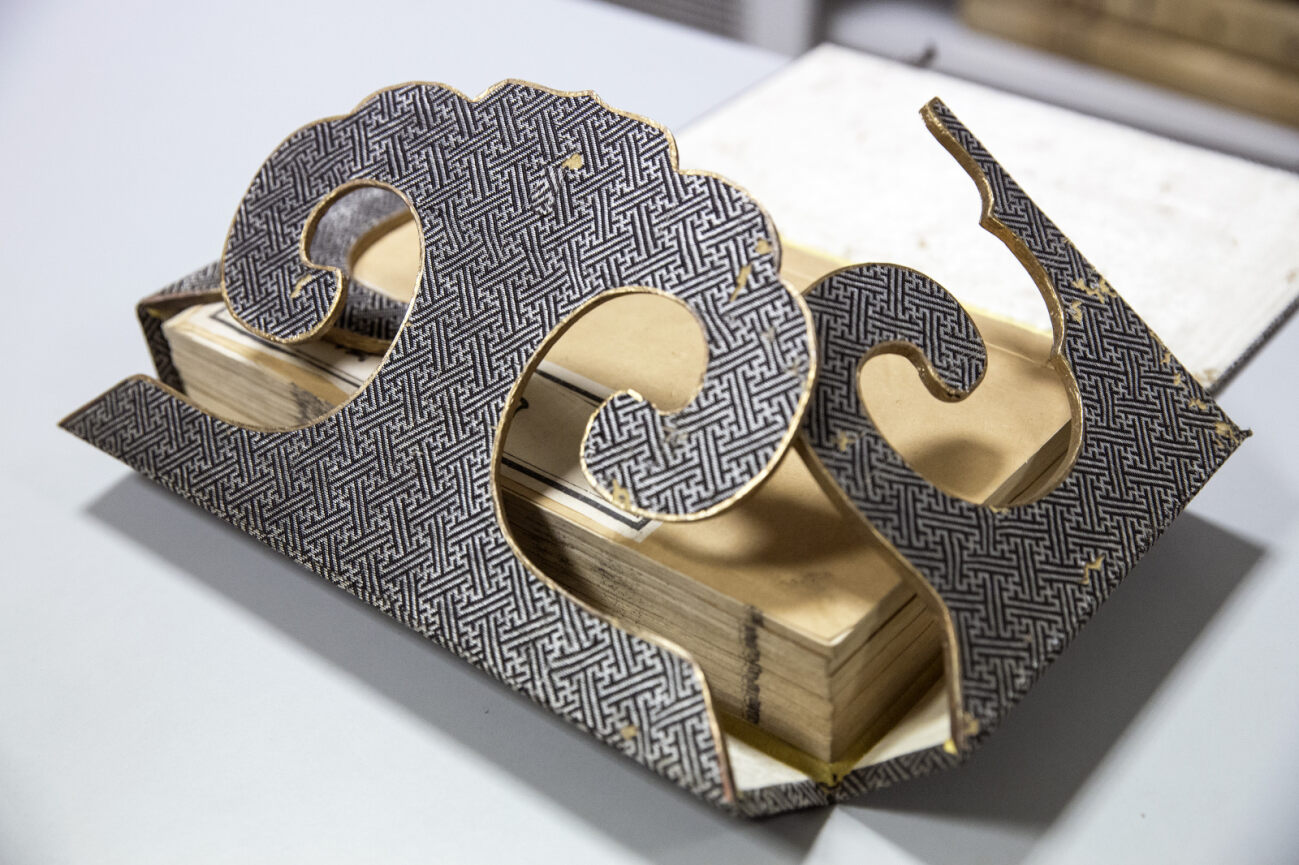
The Library also received up to 407 volumes of esteemed Chinese books on agriculture. Particularly noteworthy among these were a rare work on agriculture and silk-culture, published during the reign of the Emperor Kangxi in the eighteenth century, donated by Xu Shichang, President of China, and several classics works donated by the Minister of Foreign Affairs, Lou Tseng-Tsiang, after his visit to the IIA in 1919.
How to search?
The titles contained in the Rare books & Incunabula collection (donated to the IIA by Marquise Capelli) can be searched through print indexes, soon to be digitized.
How to access?
For more information about consulting the IRC Collection, write us at [email protected].
Lord John Boyd Orr (1880-1971) was a central figure in the discussions leading up to the foundation of FAO and became the first Director General of the UN Food and Agriculture Organization. By the time he was appointed DG of FAO he already was a renowned scientist who had authored more than 150 scientific articles and many books, mostly on nutrition and agriculture.
He was also a passionate humanitarian, Nobel Peace Prize winner, and a pioneer in the field of nutrition studies. Boyd Orr was one of the first scientists to identify the link between low income and nutritional deprivation.
How to search?
The collection is searchable through the Library's catalog and Discovery search interfaces and through a card catalogue accessible on-site
How to access?
For more information about consulting the Lord John Boyd orr Collection, look at the How to visit us page or write us at [email protected].