The Right to Food Guidelines recommend States to promote good governance as an essential factor for sustained economic growth, sustainable development, poverty and hunger eradication and for the realization of all human rights including the progressive realization of the right to adequate food. A strong coordination of food security responses between the global, national and regional levels is paramount for good food security governance.
Global governance of food security refers to a mechanism that facilitates debate, convergence of views and coordination of actions to improve food security at global but also at regional and national levels. In order to make substantial and rapid progress towards global food security, coherence and convergence are fundamental elements among policies and programmes of countries, donors and other stakeholders when addressing the underlying causes of hunger and, the recognition of the human rights dimensions of food security.
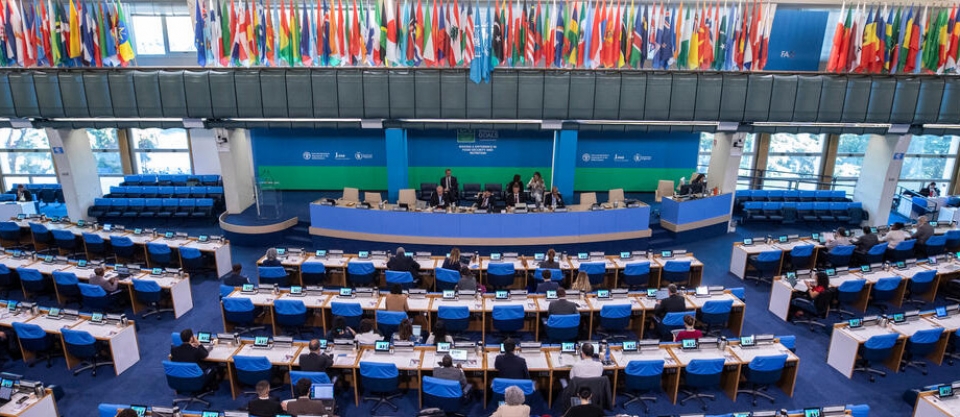
The Committee on World Food Security (CFS) serves as a forum in the United Nations System to review and follow-up of policies concerning global food security including production and physical and economic access to food. CFS is the most inclusive international and intergovernmental platform for all stakeholders to work together to ensure food security and nutrition for all.
While mandates, functions and services of regional organizations differ from region to region some generic functions can be identified in many regional organizations. One stream of activities is aimed at supporting national efforts, while a second stream of work is directed towards a global or continental level striving to represent regional concerns in these bodies. This intermediate position facilitates exposure to global debates and intimate knowledge of local level developments.