


Publications

Gender equality and forestry in West Africa: Preliminary findings and recommendations for West Africa countries
28/09/2021
Produced under the project “Global Transformation of Forests for People and Climate: a focus on West Africa”, this paper draws on a gender analysis conducted to inform and guide the project implementation. It presents findings related to gender and forestry which are common to the region. It also proposes recommendations to address gender inequalities in the forestry sector. 18 p.
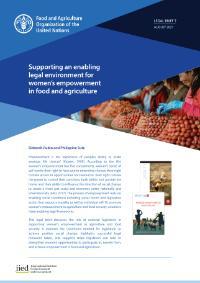
Supporting an enabling legal environment for women’s empowerment in food and agriculture
27/09/2021
This legal brief discusses the role of national legislation in supporting women’s empowerment in agriculture and food security. 10 p.

FAO Europe and Central Asia Gender Newsletter, July 2021 - Issue #4
22/09/2021
This quarterly issue features case studies from Albania, Armenia, Azerbaijan, Georgia and Kyrgyzstan. It introduces programmes that provide training in methods of modern beekeeping, livestock strategy, gender and gender equality. These programmes will contribute to the sustainable economic development of rural women and their communities as the economic empowerment of rural women is critical for the continued improvement of agriculture and the further development of the rural sector. 8 pp.
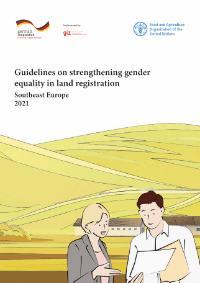
Guidelines on strengthening gender equality in land registration – Southeast Europe 2021
18/09/2021
This publication addresses the steps required to ensure that rights to land are accurately recorded and protected and how land registration systems should identify and address the barriers that women face in securing their rights. 42 p.

Bosnia and Herzegovina: Gender, agriculture and rural development (Country Gender Assessment Series)
15/09/2021
This Country Gender Assessment is intended to provide insights into the gender gaps in the agricultural sector and concerning rural livelihoods. The intention of the findings is to inform the future work of FAO and UN Women to assist the relevant state and entity institutions to ensure a more gender-sensitive approach to policymaking and programming. 94 pp.

Somalia: National gender profile of agriculture and rural livelihoods (Country Gender Assessment Series)
15/09/2021
This report highlights the important role played by women in Somalia’s agricultural sector and reveals gender disparities in access to critical agriculture and rural resources, knowledge, opportunities, services and markets. It explores the existing gender relations and gaps in the various sub sectors of agriculture, and their possible causes and impact on food and nutrition security, and makes policy recommendations to address them. 64 pp.

Report of the national gender training workshop
13/09/2021
This report provides details of a national gender training workshop for small-scale fisheries technical project staff, key value chain stakeholders, women processors, chiefs and other value chain actors. 32 pp.
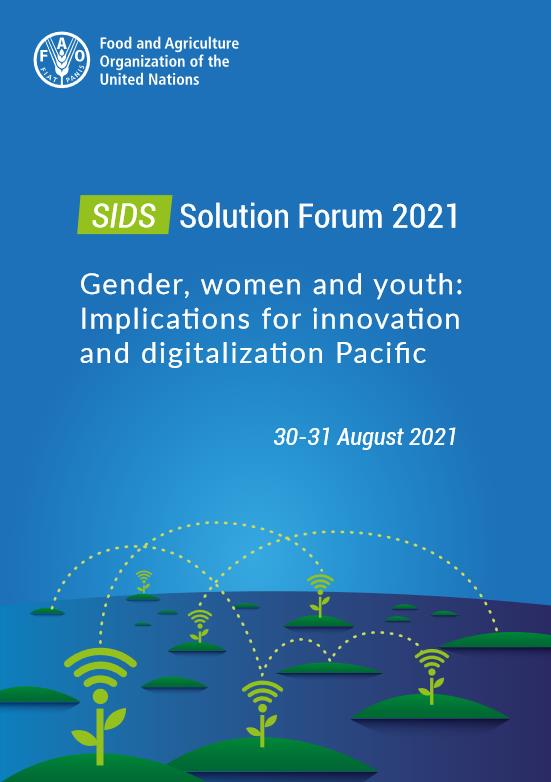
Gender, women and youth: Implications for innovation and digitalization
31/08/2021
The paper assesses the involvement of women and youth in agri-food systems in the Pacific SIDS and their capacity to adopt and devise digital and non-digital innovations. It identifies challenges and gaps and discusses ongoing and potential solutions for empowering women and youth. 34 pp.