


Papua New Guinea’s forest conservation drive triggers landmark results-based payment

Home to some of the oldest agriculture systems in the world and rich in tropical forests and biodiversity, Papua New Guinea has spent over two decades cultivating its domestic conservation strategy. At the same time, the Pacific island country has spearheaded international efforts to develop the REDD+ framework, boosting positive incentives for activities contributing to mitigation in the forest sector.
This month the country reaped the benefits of these initiatives with the award of its first major results-based payment. Supported by the Food and Agriculture Organization of the United Nations (FAO) as Accredited Entity, Papua New Guinea developed and submitted its REDD+ results-based payment (RBP) proposal, which was approved by the Green Climate fund (GCF) board this month. The USD 63.4 million payment is for emissions reductions of 17 million tonnes of CO2 equivalent in years 2014-2016.
The GCF payment is a key milestone in Papua New Guinea’s long sustainability journey – with the funds set to further help the government, customary landowners and communities strengthen their forest protection and sustainable livelihoods push.
“This is the first time Papua New Guinea has received REDD+ results-based payments - it has been almost two decades in the making,” said Abe Hitofumi, chief technical advisor at the Papua New Guinea office of the FAO. “I know many people that have worked hard on this – so I’m happy to see this achievement.
"There are now other complementary payment options emerging – such as from the private sector, carbon markets and the LEAF Coalition - and Papua New Guinea is exploring and progressing with these too,” he said, adding that other Pacific islands would be encouraged by Papua New Guinea’s latest funding success and can follow their path.

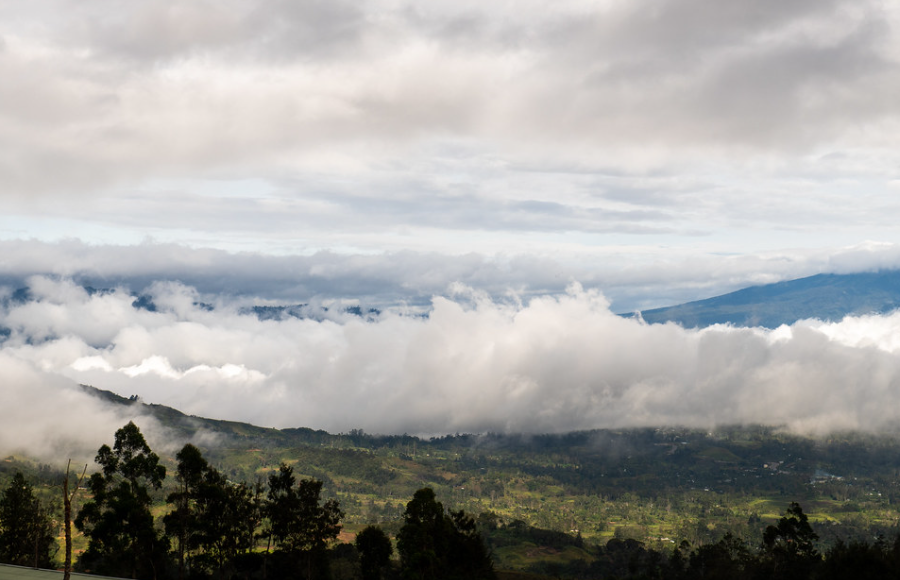
Teaming with natural beauty - including dense jungles and majestic mountains - as one of the world's 17 megadiverse countries, Papua New Guinea’s importance for global climate and biodiversity action cannot be underestimated. Boasting about 78 per cent forest cover, the country is estimated to be home to about 5 per cent of the world’s biodiversity, according to researchers.
Known as “The Last Frontier” due to its vast, untouched ecosystems and variety of animals and bird species, the country is a vital habitat for more than 20,000 species of vascular plants, 191 species of mammal (of which 80 per cent are endemic), 750 bird species (of which 50 per cent are endemic), 300 species of reptile and 198 species of amphibian.
Papua New Guinea also contains the world’s third largest rainforest after the Amazon and Congo Basin, covering 36 million hectares of the country, which is among the highest in the world with about 75 per cent being primary forests. These forests have a loss rate of less than 1 per cent per year. Threats to Papua New Guinea’s forests include mining, logging, urbanization and agriculture expansion.

The remoteness of parts of Papua New Guinea – with many areas only accessible by airplane or boat – means that protecting these forests is often a challenge. Unlike many countries, Papua New Guinea’s forests also belong to the people, not the state, with 97 per cent of land under customary tenure. These tribes share between 700-800 languages. This means that consultation, respect for cultures and traditions, and the support of these people are crucial to the success of the country’s environmental and nature conservation.
Acknowledging the country’s important role in achieving international climate and biodiversity goals – including the Paris Agreement and Kunming-Montreal Global Biodiversity Framework - over time, the Papua New Guinea government boosted initial negotiations and helped spearhead international discussions on REDD+ (Reducing emissions from deforestation and forest degradation in developing countries), while building capacity and testing approaches to REDD+ through international partnerships and alliances.
REDD+ was first discussed in 2005 by the United Nations Framework Convention on Climate Change (UNFCCC) at its 11th session of the Conference of the Parties to the Convention (COP) at the request of Costa Rica and Papua New Guinea. On behalf of the Coalition for Rainforest Nations, the two countries submitted the document titled "Reducing Emissions from Deforestation in Developing Countries: Approaches to Stimulate Action".
After the endorsement of REDD+ as an effective tool for addressing climate change and global development agendas, the UN-REDD Programme was launched in 2008 to assist developing countries, including Papua New Guinea, in reaching their REDD+ goals – including RBPs. The programme was built on the joint technical expertise of its three participating UN organizations: the FAO, the United Nations Development Programme (UNDP) and the UN Environment Programme (UNEP).
Since then, Papua New Guinea has made significant inroads in bolstering its institutional capacities in sustainable forest management and monitoring. This includes the Papua New Guinea UN-REDD National Programme, implemented by the Climate Change and Development Authority and the Papua New Guinea Forest Authority (PNGFA) in 2011.
Collaborating with the projects implemented by other international development partners such as Japan International Cooperation Agency and European Union, Papua New Guinea’s national programme also paved the way to meet the UNFCCC requirements to access results-based finance such as the establishment of a Measurement, Reporting and Verification (MRV) system, PNG REDD+ and Forest Monitoring Web-Portal and Forest Reference Emission and Forest Reference Levels that the country submitted in 2017.
Other important REDD+ supported efforts in include the launch of the country’s first-ever Multipurpose National Forest Inventory (NFI) in 2016 – the only such inventory in the region to also measure biodiversity - and the National REDD+ Strategy one year later. The NFI, which used both satellite sensing and field-based verification, enabled local scientists to expand their knowledge and gather important data on Papua New Guinea’s flora, fauna and carbon stock, to accurately estimate greenhouse gas emissions from deforestation and forest degradation. This data was also made available on various open-source platforms to shape better forest and climate change policies.
Capacity-building within the PNGFA was crucial for the successful implementation of the NFI, and a number of technical trainings were facilitated by the UN-REDD Programme and FAO on remote-sensing and data management analysis. In addition, 13 scholarships were awarded to post-graduate students at the University of Technology in Lae to research and analyze NFI data.

The GCF results-based payment awarded this week was only possible after the country established these REDD+ design elements, which are determined under the Warsaw Framework and obtained concrete results in emissions reductions. Papua New Guinea became eligible and applied for the GCF RBPs pilot programme back in 2020. Funds for that specific pilot window were however exhausted at the time and the country, together with three others (the Lao People’s Democratic Republic, Uganda and Viet Nam) remained in a pipeline. Papua New Guinea resubmitted their proposal in December 2024, which was assessed and then approved by the GCF board this week.
“This is a proud moment for Papua New Guinea. The approval of USD 63.4 million in results-based payments from the Green Climate Fund is a strong recognition of our nation’s continued commitment to protecting our forests and reducing greenhouse gas emissions,” said Debra Sungi, Managing Director of Papua New Guinea’s Climate Change and Development Authority (CCDA).
“It reflects years of hard work by our government, local communities and partners such as FAO in demonstrating real results on the ground. These funds will be reinvested into strengthening climate resilience, supporting sustainable livelihoods and ensuring our people especially those on the frontlines of climate change benefit directly from the climate action we take today,” she added.
In accordance with the National REDD+ Benefit Sharing Guidelines, 40 per cent of the new finance will go to the Papua New Guinea government to support conservation policies, safeguards systems, forest monitoring and capacity building. The remaining 60 per cent will help customary landowners and communities to enhance economic productivity and sustainable livelihoods in six targeted provinces.
Mathieu van Rijn, forestry officer at the FAO’s Asia-Pacific office said the money allocated to strengthen communities’ capacities would aid the country’s growing population to improve farming yields and develop sustainable and deforestation-free farming of commodities, such as vanilla, cocoa and coffee.
“It’s one of the vastest and most preserved areas of nature in the world,” said van Rijn on Papua New Guinea. “The majority of the investment will be for communities to help them strengthen forest landscape management and improve livelihoods.”
“The idea is to reinvest so to boost a virtuous cycle of emission reductions, reducing deforestation while enhancing livelihoods and economy,” he added.
Contacts
Serena Fortuna, Senior Forestry Officer, Halting Deforestation, Degradation and Emission Team Leader,
FAO Forestry Division
Abe Hitofumi,
FAO Papua New Guinea
Mathieu van Rijn
Forestry Officer, REDD+/NFM decentralized team
FAO Office for Asia and Pacific