



Assessment of agricultural plastics and their sustainability: A call for action
17/12/2021
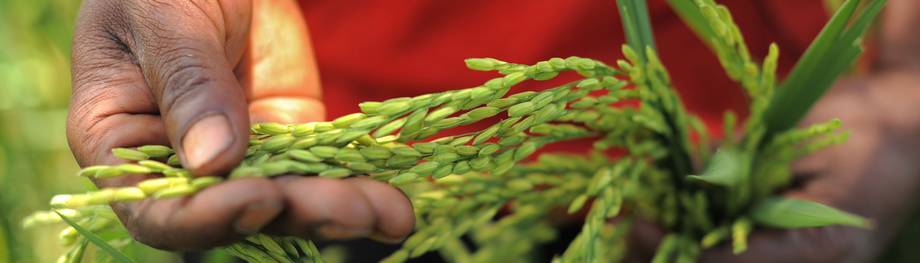
This report presents the results of a study on agricultural plastic products used globally in a range of different value chains. The study assessed the types and quantities of plastic products, their benefits and trade-offs. Sustainable alternative products or practices were identified for products assessed as having high potential to...
Mountain tourism – Towards a more sustainable path
10/12/2021
With their soaring peaks, remote locations, and majestic beauty, mountains have long been a powerful attraction for visitors from all walks of life, who are drawn by the often colorful traditions of local communities, the opportunities for sporting activities, and the spiritual solace to be found in highland landscapes. This study...

The State of the World’s Land and Water Resources for Food and Agriculture – Systems at breaking point
10/12/2021
Satisfying the changing food habits and increased demand for food intensifies pressure on the world’s water, land and soil resources. However, agriculture bears great promise to alleviate these pressures and provide multiple opportunities to contribute to global goals. Sustainable agricultural practices lead to water saving, soil conservation, sustainable land management,...

The State of Food and Agriculture 2021
23/11/2021
The COVID-19 pandemic exposed the vulnerability of agri-food systems to shocks and stresses and led to increased global food insecurity and malnutrition. Action is needed to make agri-food systems more resilient, efficient, sustainable and inclusive. The State of Food and Agriculture 2021 presents country-level indicators of the resilience of agri-food systems....

Food Outlook – Biannual Report on Global Food Markets
11/11/2021
Despite generally favourable supply prospects, international prices of most food commodities continue to remain high on robust trade with demand holding firm. Larger imports and soaring freight costs are expected to push up the world food import bill to over USD 1.75 trillion in 2021, a rise of 14 percent...

Renewable Energy and Agri-food Systems: Advancing Energy and Food Security towards the SDGs
04/11/2021
IRENA and FAO have decided to jointly develop a report on the role of renewable energy used in food chains to advance energy and food security as well as climate action towards the achievement of the Sustainable Development Goals and the Paris Agreement. While energy has a key enabling role in...
World Food and Agriculture – Statistical Yearbook 2021
03/11/2021
This publication offers a synthesis of the major factors at play in the global food and agricultural landscape. Statistics are presented in four thematic chapters, covering the economic importance of agricultural activities, inputs, outputs and factors of production, their implications for food security and nutrition and their impacts on the...
Rural poverty analysis: From measuring poverty to profiling and targeting the poor in rural areas
27/10/2021
Reducing rural poverty is a key objective of FAO. To achieve this, the Organization must reach the poor in rural areas, analysing their needs and aspirations and providing effective guidance for the design of policies and investments that foster inclusive and sustainable development. This guide was developed to strengthen FAO’s work...

Desert locust upsurge: Progress report on the response in the Greater Horn of Africa and Yemen (May–August 2021)
19/10/2021
The fight against desert locust continues in the Greater Horn of Africa and Yemen, now raging for 20 months – since January 2020. Collective efforts from governments, FAO and partners are proving extremely effective in controlling this upsurge, which is the worst to hit the region in 70 years. Thanks to generous contributions from...
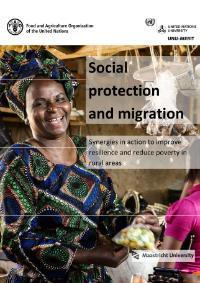
Social protection and migration: Synergies in action to improve resilience and reduce poverty in rural areas
19/10/2021
The relationship between social protection, migration, and rural development is critical to the FAO mandate to end hunger for all. In its capacity as an organization working across emergency and development contexts, FAO is well positioned to promote the synergies that exist at the intersection of social protection and migration...
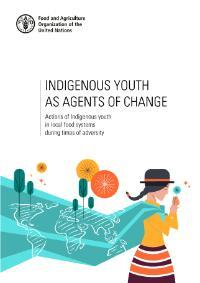
Actions of Indigenous youth in local food systems during times of adversity
30/09/2021
This publication highlights six initiatives from indigenous youth in regions around the world who are leading innovative solutions and collaborations in the face of adversity brought about by climate change and exacerbated by the ongoing COVID-19 pandemic. The youth initiatives describe how grassroots groups, networks, and platforms established by Indigenous...
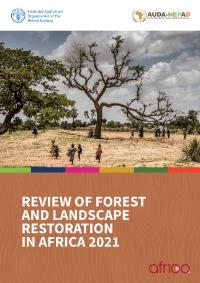
Review of forest and landscape restoration in Africa 2021
29/09/2021
This report assesses the current implementation of forest and landscape restoration (FLR) in Africa. It presents the context for FLR on the African continent, highlights major FLR initiatives, and provides an overview of FLR in Africa at the start of the UN Decade on Ecosystem Restoration (2021–2030). It identifies key...

Guidance on core indicators for food systems: Measuring the private sector's contributions to the Sustainable Development Goals
20/09/2021
The High-Level Political Forum (HLPF) acknowledged that the world is off-track to meet the SDGs. Today, the COVID-19 pandemic deepens the challenge. FAO counts on the private sector as a key strategic partner. Given FAO’s role as custodian agency for 21 SDG indicators, it was important to identify how FAO could support...

Fruits and vegetables: Opportunities and challenges for small-scale sustainable farming
20/09/2021
This book will convince the reader to care about fruit and vegetables and to see that the small-scale production of these crops is fundamental to achieving the Sustainable Development Goals (SDGs). In five chapters, the reader will learn about the challenges and rewards for producers, sellers, and consumers. This publication takes...

A multi-billion-dollar opportunity – Repurposing agricultural support to transform food systems
14/09/2021
Public support mechanisms for agriculture in many cases hinder the transformation towards healthier, more sustainable, equitable, and efficient food systems, thus actively steering us away from meeting the Sustainable Development Goals and targets of the Paris Agreement. This report sets out the compelling case for repurposing harmful agricultural producer support to...
Previous Newsletters
2026: January, February, March, April, May, June, July, September,
2025: January, February, March, April, May, June, July, September, October, November , December
2024: January, February, March, April, May, June, July, August, September, October, November, December
2023: January, February, March, April, May, June, July, August, September, October, November, December
2022: January, February, March, April, May, June, July, August, September, October, November, December
2021: January, February, March, April, May, June, July, August, September, October, November, December
2020: January, February, March, April, May, June, July, September, October, November, December