inter-Regional Technical Platform on Water Scarcity (iRTP-WS)

Knowledge Products

Water Productivity Tools and Analytics
08/03/2019
The OUBAME project started in June 2010 and is supported by FAO’s Trust Fund Program with the Government of Spain. The two-year pilot phase of the project aimed to assess the feasibility of decreasing the negative impacts of desertification on people’s livelihoods, by applying a collaborative and integrated approach to watershed management.
Crop yield changes under different climate scenarios
Water Productivity Tools and Analytics
13/02/2019
FAO implemented the ‘Climate Change and Adaptation Solutions for the Green Sectors of Selected Zones in the NENA Region’ project. The project used climate change projections, and AquaCrop, FAO’s model for crop yield response to water and climate change, to assess changes in the yield of key crops in selected NENA countries under various climate scenarios
Resilience and Climate Change Adaption
24/01/2019
The Project sets out to develop a model for LDN target setting, planning and implementation in the Sakarya basin (Türkiye) for upscaling at national level in line with Sustainable Development Goals (SDGs) Target 15.3.
Solutions to water challenges in the Middle East and North Africa region
Resilience and Climate Change Adaption
30/12/2018
The Middle East and North Africa is the world's most water-scarce region and the situation is worsening due to the impacts of conflict, climate change and economic downturn. The water crisis threatens the region’s stability as well as its human development and sustainable growth. Pasquale Steduto is FAO’s Delivery Manager for the Water Scarcity initiative in the Near East and North Africa.
Resilience and Climate Change Adaption
10/12/2018
FAO, IFAD and national governments are supporting family farmers from West and Central Africa to adapt small-scale irrigation systems to climate change to be more resilient. A survey was carried out among 691 households in 21 sites in this region, to assess how farmers are coping with climate change.
Resilience and Climate Change Adaption
18/10/2018
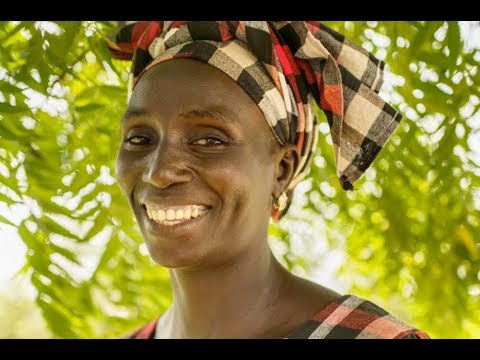
Guilé and the other women had to walk long distances to reach sources of clean water and use part of their income to pay for it. The cisterns provide clean water for drinking and growing food to millions of people in arid areas. Thanks to new water provided, she and other women can grow vegetables during the dry season.
Resilience and Climate Change Adaption
04/06/2018
Action Against Desertification is an initiative of the African, Caribbean and Pacific Group of States (ACP) to restore drylands and degraded lands in Africa, the Caribbean and the Pacific to tackle the detrimental social, economic and environmental impact of land degradation and desertification. It is a key partner of the Great Green Wall initiative.
Non-Conventional Water Resources
01/06/2018
This report reviews drought management across North Africa and the Near East. It includes Algeria, Bahrain, Egypt, Iraq, Iran, Jordan, Kuwait, Lebanon, Libya, Mauritania, Morocco, Oman, Palestine, Qatar, Saudi Arabia, Sudan, Syria, Tunisia, UAE, and Yemen, to the extent of data and information availability.
Water Governance
29/01/2018
Water scarcity in Yemen remains one of the main challenges in the agriculture sector. The unavailability of water for agricultural practices is the most limiting factor for food security. In light of these alarming situation, FAO is empowering 38 Water User Associations (WUAs) to promote better water management and reduce local conflicts over water resources.
Water Productivity Tools and Analytics
14/11/2017
In the prevailing context of higher climate variability with the rainy season being no longer predictable, supply of water is extremely important for the farmers. Farmers in Rwanda do not have enough rain for their production due to drought. There is competition for water use between rural and urban area.