


inter-Regional Technical Platform on Water Scarcity (iRTP-WS)
inter-Regional Technical Platform – Water Scarcity (iRTP-WS)

Achieving SDG 6 – Clean Water and Sanitation and SDG 2 – Zero Hunger is central to the 2030 Agenda for Sustainable Development and to the commitment to "Leave No One Behind". Yet progress remains off track. Water scarcity, climate change, land degradation, population growth and increasing competition for limited natural resources are placing growing pressure on water and food systems across many regions of the world.
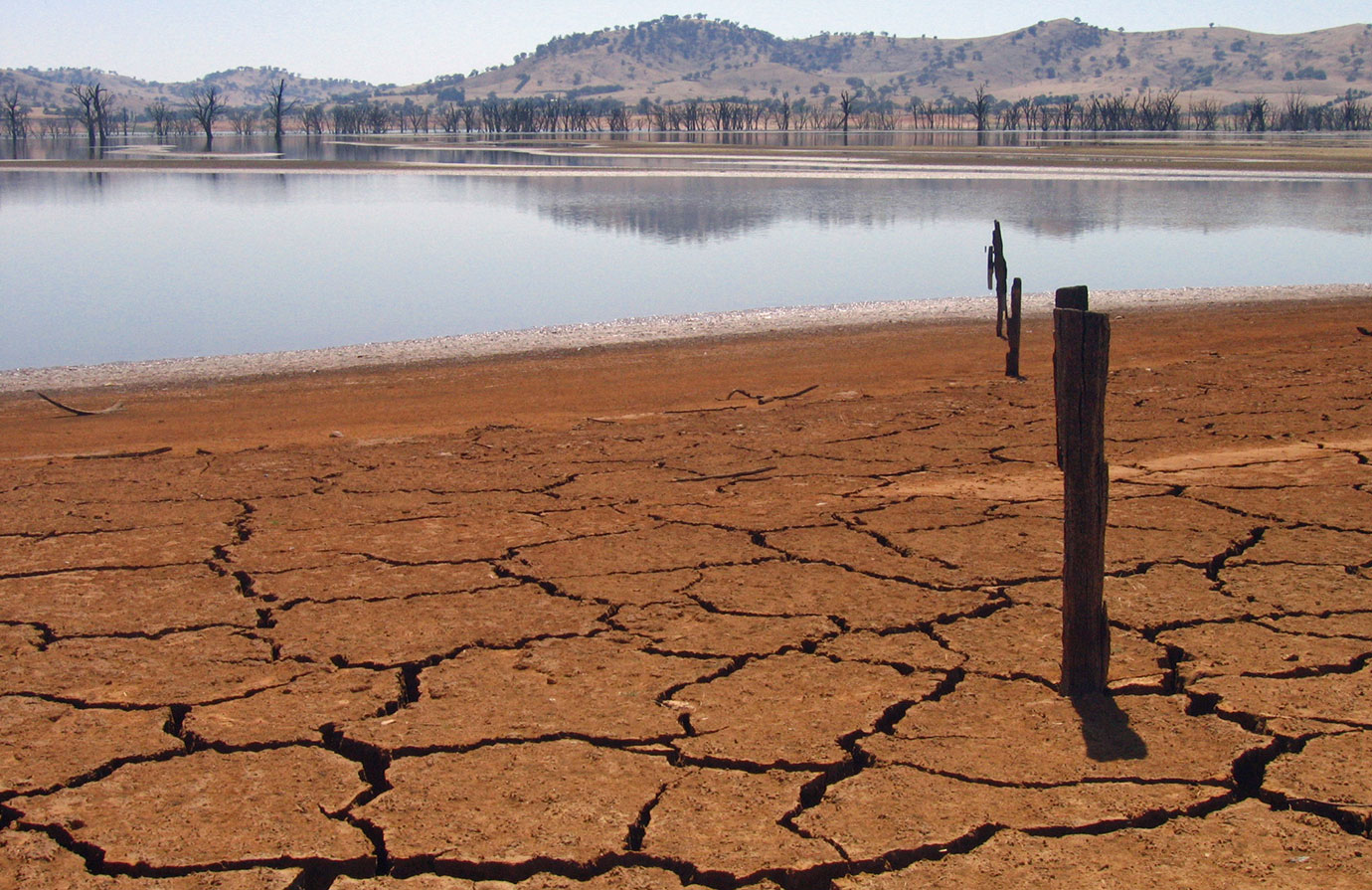
Agriculture lies at the heart of this challenge. It accounts for approximately 72 % of global freshwater withdrawals, while at the same time remaining one of the sectors most exposed to drought, water scarcity and climate variability. In the Near East and North Africa (NENA)—one of the world's most water-scarce regions—these pressures are particularly acute, with some of the world's highest levels of water stress and rapidly declining freshwater availability.
Highlights
_page_01_image_0001.jpg?sfvrsn=f2a9da47_3)
News

iRTP-WS contributed to international WEF Nexus workshop at the 26th ICID Congress
14/10/2026
The FAO Inter-Regional Technical Platform on Water Scarcity (iRTP-WS) contributed to the International Workshop on “Implementation of the Water-Energy-Food...

FAO Director-General urges stronger commitment to tackle water scarcity
24/09/2026
FAO Director-General QU Dongyu called for stronger global cooperation to address water scarcity, one of the defining challenges of...
Blogs

Blog-Integrated Water Resources Management
Unlocking Desalination for Agriculture in the Arab Region: Opportunities, Challenges, and the Case of Morocco's Chtouka Ait Baha Plant
01/03/2026
This blog explores the potential of desalination integrated with renewables, highlighting socio-economic benefits, environmental considerations, business models, and a successful case study from Morocco. By leveraging innovations, the region can enhance food security and sustainability, aligning with SDG 6 on clean water and sanitation.

Blog-Sustainable Land & Water Management for Food & Agriculture.
Embedding WEFe Nexus Thinking in Decision-Making with WatNEX
23/03/2026
Rapid population growth, accelerating economic development, and the intensifying impacts of climate change are creating unprecedented competition for natural resources. Consider the case of Artificial Intelligence (AI).

Conjunctive Water Management for Water Security: Insights from the Sahara and Sahel Observatory
Conjunctive Water Management for Water Security: Insights from the Sahara and Sahel Observatory
29/08/2025
As an intergovernmental organization, the Sahara and Sahel Observatory (OSS) has the mandate to support its member states in addressing environmental challenges in arid, semi-arid and dry sub-humid areas. Water, being a cross-cutting resource, is at the heart of its strategic orientations.

FAO's work on water scarcity


-fao-lebaon--ralph-azar--chickpeas-fvc-glo-184-mul-beqaa-lebanon_0085db429eef0cb046c28126ba68c5c03ce5.jpg?sfvrsn=bae3726e_2)
Events
25/10
2026
29/10
2026
Cairo Water Week 2026
25/10/2026 - 29/10/2026
Cairo Water Week 2026 explores water cooperation, agricultural water security, desalination, wastewater reuse, climate resilience, digitalization, finance and water governance.
2/12
2026
4/12
2026
2026 United Nations Water Conference
Hybrid Event, 02/12/2026 - 04/12/2026
A high-level global conference co-hosted by Senegal and the UAE to accelerate progress on SDG 6 (clean water and sanitation), boost investment, innovation, and international cooperation, and advance global water governance. Format: Primarily in-person with potential hybrid elements.
E-learnings


Best Practices

Water sharing: From underground to common ground
16/11/2023
Funded by the Swedish International Development Cooperation Agency, FAO’s Water efficiency, productivity and sustainability in the NENA regions project...

Finding greener, more climate-resilient ways of producing our food
11/02/2021
When we see the news reports on climate change, it often includes footage of factory chimneys and traffic jams. We may or may not realize that agriculture...

Tackling climate change head-on
22/04/2022
If we want to tackle climate change, our agri-food systems are one of the key places to start. We need to look at the way we farm, the way we eat and...

What Water Means for One Farmer, Once a Migrant Now a Returnee, in Kenya
22/03/2021
Water. For all people, it means health, hygiene and hydration. For the spiritual, it can mean a connection with creation, community or oneself. For...

Sharing Water in Rwanda’s Breadbasket
27/08/2020
Water. For all people, it means health, hygiene and hydration. For the spiritual, it can mean a connection with creation, community or oneself. For...

Rainwater Harvesting and Agroecological Irrigation Make Farmers More Resilient in Senegal
23/03/2020
Last September in Senegal, more rain fell in a single day than in the usual 3-month rainy season. Intense rain in shorter periods of time followed by...

Water Catchment, Reserve and Promotion of Rational Use of Water in San Andres and Providencia, Colombia
01/10/2013
The increase in population in the Colombian archipelago increased the demand for water for human consumption and food production, which could not be...

Combination of Practices to Improve Environmental Protection and Production in Las Piedras River Basin in Colombia
31/07/2011
Las Piedras river basin that originates in the Colombian Massif is of great importance for Colombian hydrology, it is a tributary of the Cauca River...

Linking Water, Food, and Gender Equality for Sustainability: Learnings from Myanmar
31/12/2019
This study is a part of a three-year project which was initiated in 2019. It is proposed to be conducted in three phases and is now in its final phase....

Modernizing Irrigated Agriculture to Protect and Restore Aquatic Biodiversity and Ecosystem Services in South-East Asia
31/12/2021
The project is under implementation. It is being implemented in three phases between 2019 to 2021: each phase is approximately a year long. Asia contains...

Irrigation Performance Assessment Project Cambodia
31/12/2020
The yearlong project was implemented between Oct 2019 to Dec 2020. This project is part of the Next Generation Irrigation and Water Management for the...

Resilience Stories from Africa
31/12/2016
Today, 100 million people in Africa face acute hunger, and the continent’s population is expected to increase from 1.2 billion to 2.5 billion in 2050,...

Mobilising Commercial Finance to Scale up Investment Towards Sustainable and Resilient Agricultural Water Management
28/01/2020
Sustainable water use in agriculture has a key role to play in achieving the Sustainable Development Goals (SDGs), the Paris Agreement and other policy...

Maghreb- A Pole of Excellence for Unconventional Waters Utilization
26/11/2021
While Maghreb countries are committed for the implementation of the SDGs, water remains a key factor of sustainable development for the region. The...

Farmers Field Schools For Improved Water Productivity
30/11/2021
The Near East and North Africa (NENA) region has the lowest per-capita fresh water resource availability among all regions of the world and in the coming...

Crop-Growth Models Supporting Optimal Solutions For Climate Change Adaptation
19/01/2022
The Near East and North Africa (NENA) region has the lowest per-capita fresh water resource availability among all regions of the world and in the coming...
Regional Offices
The principal function of the Regional Offices is the overall identification, planning and implementation of FAO's priority activities in the region. They ensure a multidisciplinary approach to programmes; identify priority areas of action for the Organization in the region and, in collaboration with departments and divisions at headquarters, advise on the incorporation of such priorities into the Organization's Programme of Work and Budget. The Regional Offices also implement approved programmes in the region, monitor the level of programme implementation,and draw attention to any problems and deficiencies.
Specific activities of the Regional Offices include:
Ensuring a multidisciplinary approach to projects and programmes implemented in the region with FAO's technical assistance.
Reporting on the major developments and trends in countries of the region, based on regional and Subregional objectives concerning food and agriculture.
Organizing the FAO Regional Conference, every two years.
Maintaining policy and technical dialogue with and among FAO member countries, also involving national and international institutions.
Following up on the World Food Summit and issues related to food security in the region.
Promoting technical cooperation among countries of the region.
Select an office
- Regional Office for Africa, Ghana, Accra
Focal Point for iRTP-WS: Valère Nzeyimana
- Regional Office for Asia and the Pacific, Thailand, Bangkok
Focal Point for iRTP-WS: Caroline Turner - Regional Office for Europe and Central Asia, Hungary, Budapest
Focal Point for iRTP-WS: Sara MarjaniZadeh - Regional Office for Latin America and the Caribbean, Chile, Santiago
Focal Point for iRTP-WS: Sebastián Vega González & Rafael España Marquez - Regional Office for the Near East, Egypt, Cairo
Focal Point for iRTP-WS: Georges Gharios
Key databases and software models
- AQUASTAT: FAO’s global water information system
- AQUACROP: The industry-leading crop–water productivity software model
- AQUAMAPS: Global spatial database on water and agriculture
- CROPWAT A decision support tool developed by the Land and Water Development.
- WatNEX: A water accounting engine to support NEXUS analysis.
Contacts
- Mohamed AlHamdi
- Georges Gharios
Senior Land And Water Officer
Water Resources Management Specialist