Biodiversity 

20/05/2023
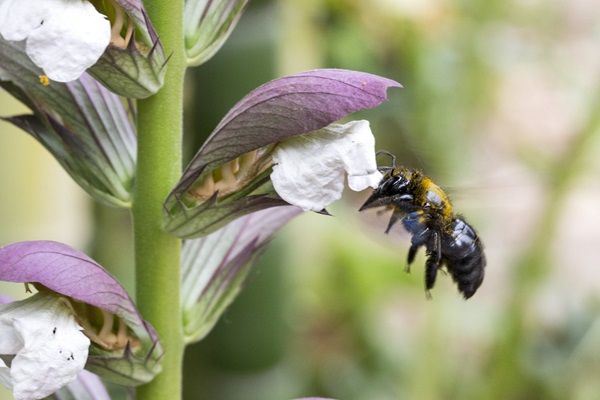
Pollination is one of nature’s most important processes contributing to biodiversity. It helps us to produce a wide variety of plants many of which are also food crops. An estimated 90 percent of the world’s flowering plants depend on pollination for reproduction. And though often overlooked, bee...
20/05/2023
Changing the fate of an extraordinary bee species for the benefit of all: FAO, the Moroccan government and local beekeepers are making it their mission to save the Saharan yellow bee whose importance to the region’s ecosystems and biodiversity cannot be understated.
12/05/2023
In its 18th Session, the United Nations Forum on Forests (UNFF18) convened from UN headquarters in New York from 8 to 12 May, with the FAO delegation at UNFF18 led by Zhimin Wu, Director of the FAO Forestry Division and Chair of the Collaborative Partnership on Forests (CPF).
09/05/2023
Biodiversity includes organisms that can help farmers grow crops successfully, such as bees and birds that pollinate crops,  earthworms that keep soils healthy and microorganisms that are capable of acting as biological control agents. The indiscriminate and inappropriate use of pe...
02/05/2023
The Food and Agriculture Organization of the United Nations (FAO), with support from the European Union (EU), moved a collection of unique genetic samples from Kharkiv in the east of Ukraine to a safe location in the west of the country. At a time when the world is facing an unprecedented loss of agricultural biodiversity in farmers’ fields, it is more important than ever to ensure that crop diversity is safeguarded, including the diversity that is held in genebanks.
18/04/2023
Picture patches of tropical, dry forest separated by agricultural land stretched across the surface of six countries at the heart of the American continent. This is the Central American Dry Corridor, a 1 600-kilometre-long expanse through Guatemala, El Salvador, Honduras, Nicaragua, Costa Rica and Panama – home to 11.5 million rural people, who largely depend on agriculture for their livelihoods.
30/03/2023
Sayad village is one of the most ancient settlements nestled on the Caspian Sea coast of Azerbaijan’s Khachmaz district. It’s long been famous for its numerous varieties of succulent tomatoes thanks to the farmers’ careful cultivation of the crop and the sunny climate. But something new and transformative is happening. Farmers are reviving and building on their region’s traditional agricultural techniques, such as crop rotation, with the help of training and support from the Food and Agriculture Organization of the United Nations (FAO) and the European Union.
30/03/2023

Brussels, Geneva and New York – The rethinking of food and agriculture and the necessary sector transformations we need moving forward must take into consideration the implementation of the closely interlinked climate change and biodiversity outcomes from COP27 and COP15, respectivel...

05/03/2023

The high seas comprise nearly two-thirds of the world's ocean and are filled with a variety of fish species, which are essential for the ocean's biodiversity. They are part of flourishing ecosystems that regulate our climate, provide vital habitats for hundreds of thousands of species and support crucial fisheries.

But high seas ecosystems are facing new challenges: climate change, pollution, and unsustainable practices are threatening their fragile balance. Rising water temperatures are forcing many species to find new habitats, while unsustainable practices, such as overfishing, are impacting fish stocks and biodiversity.

03/03/2023

"I have a duty to protect the forest, as it feeds me and my family," says Thomas.

The Ituri Forest, which Thomas Aseli speaks about with emotion, is located in the northeast of the Democratic Republic of the Congo and is a sacred place for the Mbuti Indigenous People. Within this spectacular rainforest is the Okapi Wildlife Reserve. It occupies about one-fifth of the forest and houses some of the richest wildlife in central Africa, including a large population of the reserve’s iconic okapi, also known as a forest giraffe. It is also home to more than 100 species of mammals, including several endangered species such as the forest elephant and the eastern chimpanzee.

28/02/2023

Tuesday 28 February 2023 - 12:00-14:00

Wild plant genetic resources for food and agriculture: their conservation and sustainable use

This webinar is a follow up to the First International Multi-stakeholder Symposium on Plant Genetic Resources for Food and Agriculture: Technical Consultation on in situ conservation and on-farm management of PGRFA, held in March 2021.  At this event, examples of the continuum of management practices for wild plant genetic resources for food and agriculture, from their conservation to use in breeding improved crop varieties, will be presented and discussed.

14/02/2023
Two biodiverse agricultural and agroforestry systems, or chakras, in Ecuador - one in the Andes mountains and one in the country’s Amazon region - have won recognition as Globally Important Agricultural Heritage Systems (GIAHS) by the Food and Agriculture Organization of the United Nations (FAO)....
08/02/2023

Pulses contribute to increasing the resilience of farming systems and providing a Better Life for farmers in water scarce environments, as they have a low water footprint and can better tolerate drought and climate-related disasters compared with other food crops, making them an essential tool to adapt and mitigate climate change. Including pulses in various farming systems (e.g. agroforestry, intercropping and integrated farming systems) can help to increase the resilience of agriculture livelihoods and improve productivity.

08/02/2023

8 February 2023 - Agrifood systems have the potential to make a significant contribution to the 2030 Agenda and more specifically to the conservation, sustainable use and restoration of biodiversity as stipulated in the Convention on Biological Diversity and the Kunming-Montreal Global Biodiversity Framework.

23/12/2022
The community of the world’s nations adopted a landmark framework to support global biodiversity on 19 December, and the agreement contains significant contributions from the Food and Agriculture Organization of the United Nations (FAO), committed to make sure that the needs and impacts of agrifo...
22/12/2022
Washington, DC - The fifteenth meeting of the Conference of the Parties (COP15) to the Convention on Biological Diversity (CBD) ended earlier this week in Montreal, Canada with a landmark agreement to protect 30 percent of the world’s lands, coastal areas and inland waters by 2030. The final text...
21/12/2022

Described as the most important global meeting for the future of our planet this century, the 15th Conference of the Parties (COP15) to the United Nations Convention on Biological Diversity (CBD), held in Montreal, Canada under the presidency of China, concluded on Monday 19 December. Around 18 000 people registered for the conference, including representatives from more than 194 parties to the CBD. 

17/12/2022
Despite the substantial progress made in spreading knowledge about soil biodiversity and its functions, only around 1% of soil organisms have been identified so far. Moreover, soil biodiversity loss remains one of the main global threats to food security in many regions of the world and is likely...
15/12/2022
As negotiators gather in Montreal to agree on a new deal to protect biodiversity, success will depend on the full engagement of the food and agriculture sectors. Our ecosystems are being pushed to the limit. Conservation alone can’t get the job done. We must take action to conserve, protect, rest...
14/12/2022

Martine Biron, Minister of International Relations and Francophonie and Minister responsible for the Status of Women, and Maria Helena Semedo, Deputy Director-General of FAO, are proud to announce the technical and financial partnership between Quebec and FAO in the form of an international climate cooperation project entitled Accelerating adaptation to climate change in agriculture and food security" (SAGA)