


Forests and Innovation: New solutions for a better world. See how you can take part in this year's International Day of Forests
21/03/2024
The United Nations General Assembly proclaimed 21 March the International Day of Forests (IDF) in 2012. The Day celebrates and raises awareness of the importance of all types of forests. On each International Day of Forests, countries are encouraged to undertake local, national and internation...
Célébrons la Journée de la langue française!
20/03/2024
La FAO produit un volume important de publications dans diverses langues et régions, ce qui reflète son engagement en faveur du rayonnement de la diversité linguistique et de l’inclusivité. Les publications en français contribuent à une part substantielle de l’ensemble de la production éditori...
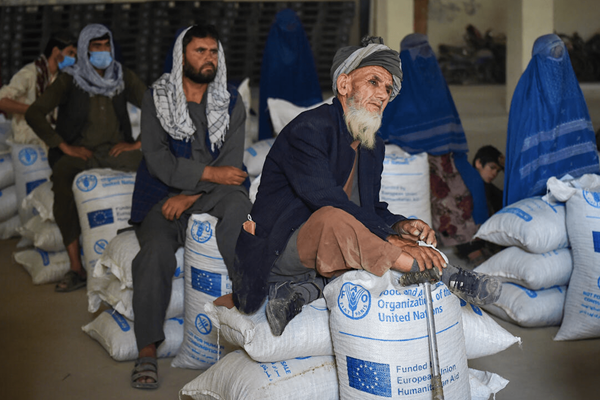
See how, together, the European Union and FAO are leveraging innovative approaches that benefit the global community
18/03/2024
The EU and FAO are driven by a mutual commitment to end poverty, hunger and malnutrition on the planet. This partnership is based on shared interests, a common vision, and joint efforts to achieve the 2030 Agenda for Sustainable Development. Together, the EU and FAO leverage innovative approac...
m.tmb-th600x400.jpeg?Culture=en&sfvrsn=6ade015f_1 "uf15rnx-po_afg_2024019_0050-(1)m")
Afghanistan: the food security situation is improving, but the crisis is far from over
14/03/2024
Afghanistan is the Food and Agriculture Organization of the United Nation’s (FAO) single largest country programme, where it continues to carry out its operations despite the ongoing political instability. The Organization has over 400 employees on the ground and is present in every one of the...
s.tmb-th600x400.jpeg?sfvrsn=54689935_2 "uni488774-(1)s")
Projected famine in Gaza: FAO urges immediate access to deliver urgent and critical assistance at scale
18/03/2024
The Food and Agriculture Organization of the United Nations (FAO) raises alarm over the rapidly deteriorating hunger crisis in the Gaza Strip, where famine is projected to occur anytime between now and May 2024 in the northern governorates, according to

Artificial Intelligence: the Next Frontier in Agrifood Systems Transformation
28/02/2024
"Whenever someone mentions “artificial intelligence,” or AI to me in the context of agriculture, I get excited and can’t help thinking we are at the brink of a massive paradigm shift that is reshaping the landscape of global food security. I can see the potential it offers to bring solutions c...
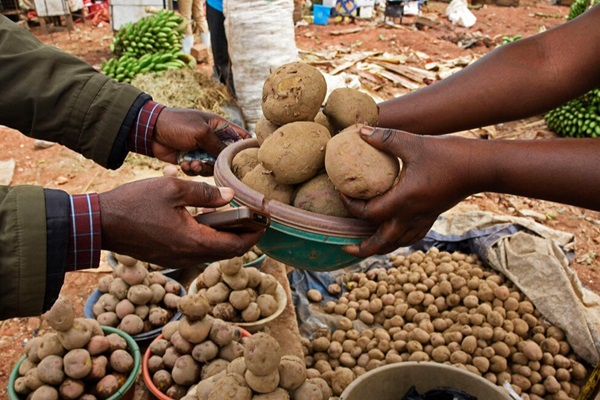
Potatoes: So Familiar, So Much More to Learn
11/03/2024
A staple food for the world's population, potatoes are rich in carbohydrates, providing a primary source of energy. They also contain several micronutrients including B vitamins, vitamin C, folate, potassium, phosphorus, and magnesium. Potatoes are a vital part of the global food system a...
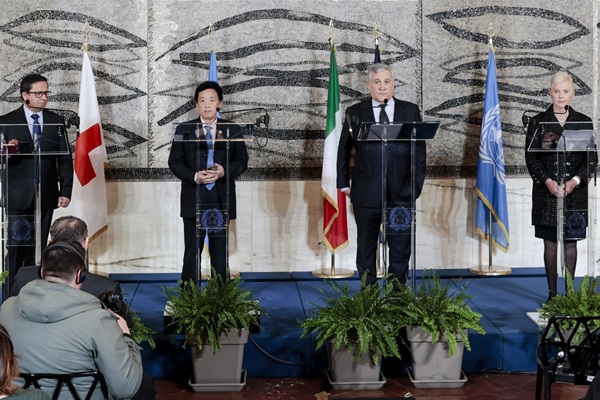
Food for Gaza: Statement by QU Dongyu, Director-General of the Food and Agriculture Organization of the United Nations
11/03/2024

Yielding the power of numbers to fight hunger, one statistician at a time
13/03/2024
When thinking of the work of statisticians, the image of croplands and farm fields probably does not come to mind, but in fact, agricultural statistics are vital to understanding and addressing the on-the-ground realities of food insecurity, and more professionals are needed in this field to i...
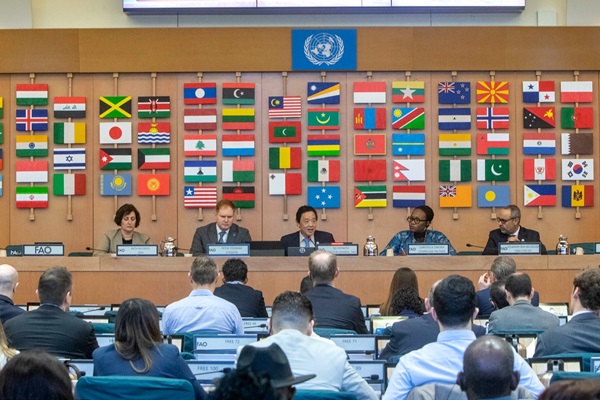
FAO urges more cooperation in the banana sector, significant for some least developed and low-income food-deficit countries and smallholder farmers
12/03/2024
The 4th Global Conference of The World Banana Forum (WBF), hosted by the Food and Agriculture Organization of the United Nations (FAO), opened at FAO headquarters today ...

Science and diplomacy for ocean governance in support of food security
21/02/2024
FAO Brussels Director, Raschad Al-Khafaji, delivered closing remarks at the “OCEAN FUTURES 2030: Science and diplomacy for ocean governance – our common ocean” event, organized by the University of Bergen together with the Arctic University of Norway, Arctic Frontiers, the EU Science Dipl...
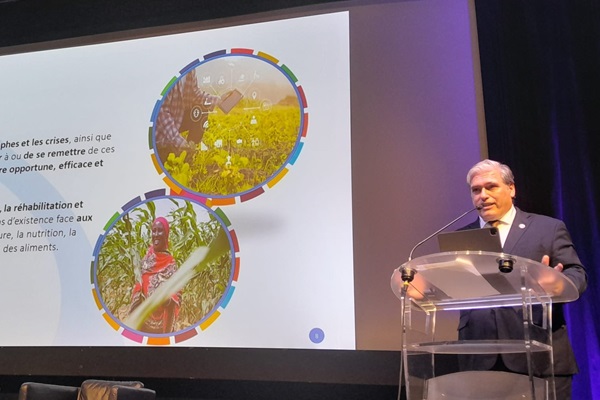
FAO Brussels presents at the Climate Chance Summit in Wallonia
09/02/2024
The FAO Liaison Office with the European Union and the Kingdom of Belgium participated in the first European Summit dedicated to adaptation issues “Climate Chance Europe 2024 Wallonia...

Agrifood for Tomorrow: robotics and automation
15/02/2024
Within the framework of FAO’s Brussels office activities related to Agrifood for Tomorrow, FAO participated in the two-day Forum on Robotics in Agriculture, organized by the


Glückwunsch! Hay Milk in Austria celebrated FAO recognition as a Globally Important Agricultural Heritage System
09/03/2024
Salzburg - Austria marked a significant milestone as it celebrated the formal recognition of Traditional Hay Milk Farming in the Austrian Alpine Arc as a FAO Globally Important Agricultural Heritage System (GIAHS). The event, attended by 800 guests, mainly farmers from th...

The unjust climate: Discover the groundbreaking report measuring the impacts of climate change on rural poor, women and youth
05/03/2024

Women play a vital role in agrifood systems. To grow equality, we need to address the challenges they face
30/05/2023
Women play a vital role in our agrifood systems: as farmers, retailers, wage workers, entrepreneurs, and beyond. But their working conditions and economic opportunities are influenced by gender inequalities within the household, the community, the institutions, and the broader society.
T...

Women-led cooperatives foster resilience amidst adversity in Türkiye
06/03/2024
By providing them with machinery and equipment, FAO ensured that women-led cooperatives received the help they needed to rebuild and recover after the earthquake. Such initiati...

FAO Agrifood Economics and Policy Division Director presents the Global Roadmap for transforming agrifood systems to ensure food security to DG AGRI
05/02/2024
Upon invitation by the European Commission`s Directorate-General on Agriculture and Rural Development (DG AGRI), David Laborde, FAO Director of the Agrifood Economics and Policy Division visited Brussels to deliver a keynote presentation at a technical workshop on food security.
...
FAO report: Heatwaves and floods affect rural women and men differently, widen income gap
05/03/2024
Climate change is disproportionately affecting the incomes of rural women, people living in poverty, and older populations, as their capacity to react and adapt to extreme weather events is unequal, a new report from the Food and Agriculture Organization of the United Nations (FAO) finds.
<...