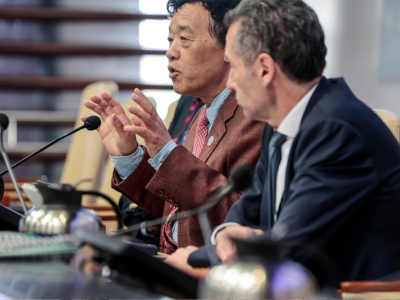
Montenegro positions itself for new approaches in private forest management planning and monitoring
01/07/2024

New FAO Representative appointed for the Kyrgyz Republic
28/06/2024
The Food and Agriculture Organization of the United Nations (FAO) office in Bishkek is now lead by Oleg Guchgeldiyev, as he took up his duties today as FAO Representative in Kyrgyzstan. Oleg Guchgeldiyev, a professional with broad experience in climate change, environmental strategic planning and biodiversity conservation, joined FAO in 2016 as regional coordinator for development of a large-scale project for Central Asian countries and Türkiye on sustainable land management. Since 2018, he has been serving as FAO Representative in Tajikistan.

Be food safe—prepare for the unexpected
27/06/2024
Every year on 7 June, World Food Safety Day emphasizes the collective, societal nature of food safety work. The 2024 theme calls for all actors along the food value chain to prepare for emerging threats. On Tuesday, a webinar brought together experts of the Food and Agriculture Organization of the United Nations (FAO) and the World Health Organization (WHO) to inform and inspire food safety professionals from across Europe and Central Asia to better manage food safety risks – both those known and those emergent. The virtual event contributed to the understanding of how to prevent future food safety incidents and crises, how to recognize and better prepare for them, and was an opportunity learn from actual examples from the region.

Support for animals means support for families in the Republic of Moldova
25/06/2024

Living and breathing gastronomic traditions in Serbia
18/06/2024

Quadripartite meeting in Vienna advances One Health in Europe and Central Asia
17/06/2024

International network plans action against invasive species in urban forests
14/06/2024
FAO and the Regional Centre for Forestry and Rural Development (REFORD) in North Macedonia hosted the annual international meeting of the Forest Invasive Species Network for Europe and Central Asia (REUFIS) from 4 to 6 June 2024 in Skopje, North Macedonia. The primary focus of this year’s meeting was the role of invasive species in urban forest planning. During this three-day event, participants explored the relationship between invasive species and urban forestry.

In Berlin, FAO reaffirms commitment to improving Ukrainian farmers’ resilience and recovery
13/06/2024

FAO helps develop action plan to control fish diseases in Kyrgyzstan
10/06/2024
Disease outbreaks severely constrain aquaculture development, and the processes for controlling diseases and managing health are different in aquaculture than in the terrestrial livestock sector, primarily due to the fluid environment. For this reason, Kyrgyzstan, with support from the Food and Agriculture Organization of the United Nations (FAO), has begun to develop a national action plan for the control of fish diseases. The project supports fish farms through the implementation of best practices in fish health management, biosafety on fish farms and the planning of production activities. This can help improve product quality and increase production volumes.

Locust control can be made more sustainable, Central Asia’s agriculture ministers say
07/06/2024

To safeguard the food supply from hazards, proactivity is key, say food industry experts in Kyrgyzstan
07/06/2024

LANDNET workshop looks forward while celebrating 100 years of land consolidation in Europe
05/06/2024
Facilitated by the Food and Agriculture Organization of the United Nations (FAO), the fifteenth international LANDNET workshop, starting today in Middelburg in the Kingdom of the Netherlands, is bringing together about 100 experts from roughly 30 countries to share their experiences on land consolidation. Specifically, the experts will discuss how multipurpose land consolidation can contribute to larger goals such as climate change adaptation and mitigation, nature restoration, and improved biodiversity and environmental conditions.

FAST Partnership bridges climate funding gap in agrifood systems
04/06/2024

Soil remediation and green technologies offer solutions to pesticide pollution and soil sustainability
29/05/2024
As part of an ongoing pesticide management and disposal project from the Food and Agriculture Organization of the United Nations (FAO) and the Global Environment Facility (GEF) in Central Asia and Türkiye, two international events were held in Almaty, Kazakhstan. To discuss the latest trends and explore the ways digital technologies can ameliorate the management of pests and pesticides in Central Asia, a workshop on emerging green technologies for pest and pesticide management on 15 April was conducted.

Harvesting data from space to inform policy predictability and investments in Ukraine’s grain sector
28/05/2024
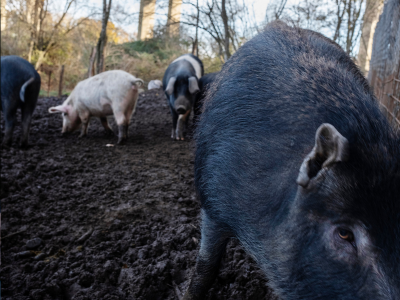
In the Western Balkans, FAO builds capacity in investigating outbreaks of African swine fever
24/05/2024

Members of FAO’s Europe and Central Asia region discussed the implications of the war in Ukraine
23/05/2024
Hosted by the Republic of Moldova, the Thirty-fourth Session of the Regional Conference for Europe, held 14–17 May, brought together over 300 participants – representing all 53 Member Countries from the region and the European Union as a Member Organization, as well as United Nations agencies, intergovernmental and non-governmental sectors, research and academia, the private sector and civil society. The final report of the conference, adopted on 17 May, guides FAO and all relevant actors in advancing the transformation of the region’s food systems towards a more equitable, prosperous, and sustainable future. Here are some of the highlights.

Science and innovation are key to preserve traditional agricultural systems
21/05/2024

34th Session of FAO Regional Conference for Europe concludes discussions on agrifood systems transformation
17/05/2024
The 34th Session of the FAO Regional Conference for Europe (ERC) ended today following four days of exchanges on the steps needed to transform agrifood systems in Europe and Central Asia.
Director-General says four-day Conference helped identify the priorities needed for FAO "to do more and better."